Best Home Exercise Equipment for Seniors: What to Compare
Choosing the best home exercise equipment for seniors starts with a structured comparison of space, setup, training coverage and support, not with a single machine’s feature list.
How to Compare Home Exercise Equipment Options for the Best Home Exercise Equipment for Seniors
The useful starting point is a neutral checklist. Compare space and surface requirements, setup and installation, training coverage, operator training, service and spare parts, and the documentation you will request from any supplier. A device that looks simple in a photograph can still require a clear plan for who installs it, who trains the people who will use it, and who handles technical questions after handover.
- Space and surface: measure the area that will actually be used for training and check the floor surface.
- Setup and installation: ask who installs the equipment, what it mounts to, and what power or surface requirements apply.
- Training coverage: list the body areas and movements the device is designed to cover, rather than assuming one item covers everything.
- Operator training: agree who will be trained and who will supervise sessions.
- Service and spare parts: ask what support and parts can be arranged after purchase.
- Documentation: request the manuals, specifications and regulatory documentation relevant to your market.
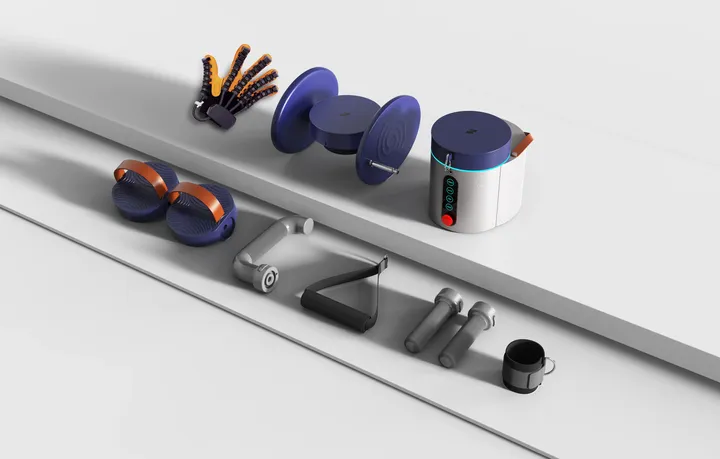
As one option in that comparison, the UniGym All-in-One Home Gym System is a multi-in-one home rehabilitation training system with training coverage across hands, upper limbs and lower limbs as one system. Its electric suction-cup base needs a smooth, non-porous surface. Buyers can review the UniGym All-in-One Home Gym System product page and compare those features against the checklist, alongside the wider rehabilitation equipment range.
Write the checklist down before demonstrations. Ask suppliers to state the mounting method, the surface it needs, the training movements the device is designed to cover, and the support path after handover. For buyers comparing several categories, a regulatory documentation request is a practical way to keep technical questions separate from the sales discussion.
What to Check Before You Buy
For the best exercise equipment for seniors, the useful comparison goes beyond the machine itself. These questions matter for distributors planning a product line, clinics preparing a room, care institutions managing shared equipment and home-care buyers who need a clear support path.
For the best fitness equipment for seniors, single-purpose items and multi-function training devices are not the same purchase. Single-purpose items usually ask the buyer to assemble a set of separate products for different movements; a multi-function training device concentrates training coverage in one system, with different setup, storage and support needs. UniGym offers 10+ training movements for the hands, upper limbs and lower limbs within one system. That description is about training coverage, not a claim that one device replaces every other item in every setting.
For a compact home training corner, the best home gym for seniors may be one device rather than several. Compare storage and tidiness, check the surface and mounting points, leave room to move around the device, and keep support contacts to hand.
A home training corner also needs a simple storage plan. Accessories should have a defined place, the device should not block a walkway, and the person supervising should be able to stand near the training position without stepping over loose items.
Space, Surface and Safety Checks
Check the floor surface and stability, plan clearance around the device, and agree who supervises sessions. A tidy setup with clear access is easier to review than a crowded one, especially when equipment is shared between rooms or users.
- Measure the floor area that will be used during training, not only the device outline.
- Check that the floor surface is stable and suitable for the mounting method.
- Leave clear space around the device for the person supervising and for moving into position.
- Agree who supervises sessions and how questions are escalated.
For UniGym, the electric suction-cup base needs a smooth, non-porous surface. Include those two points in the site check before delivery, together with the supervision plan and the support contacts you will keep at hand.
If the surface is not suitable for the mounting method, change the location before delivery rather than planning around it later. For shared care settings, mark the training position and keep the surface clear between sessions. For home use, keep the support contact and the manual where the person supervising can reach them.
How to Compare the Best Home Exercise Equipment for Seniors
For the best exercise equipment for seniors at home, delivery and setup should be part of the comparison. Ask any supplier who installs the equipment, what the device mounts to, what power and surface requirements apply, and who provides operator training on handover. A clear answer makes the handover easier to plan for clinics, care institutions and home-care buyers.
Installation guidance, operator training and remote technical support can be arranged; ask sales to confirm the schedule for your configuration.
For exercise equipment for elderly at home, support after purchase matters as much as the hardware. Operator training, installation guidance, remote technical support and spare parts can be arranged. Minimum order starts from one unit, with volume pricing for distributors and institutions. Lead time is 15–30 working days for standard configurations; customised builds and large orders are scheduled on confirmation. Documentation and payment terms are questions to ask sales. You can read the Fushoukang case study for a named project example, and contact our sales team for documentation and configuration questions.
Questions About Exercise for Older Adults
What is the best exercise for an elderly person?
Guidelines recommend adults aged 65 and over be physically active daily, do strength, balance and flexibility activities at least 2 days a week, and accumulate at least 150 minutes of moderate-intensity activity weekly. Another guideline recommends older adults aim for 150 minutes of moderate-intensity aerobic activity weekly, muscle-strengthening activities on 2 or more days weekly that work major muscle groups, and balance activities. The practical answer is a mix, not one movement.
Where is the best place for seniors to exercise?
Studies report home-based physical activity programs can have higher adherence than center-based programs; one trial found 68% adherence at two-year follow-up versus 36% in the center-based group. Studies in older adults also report adherence can be much lower than retention; an Australian retirement village group intervention had 92% return for follow-up testing but average attendance of 42% of sessions. The setting should fit the routine and the supervision available.
What are some common types of exercise equipment used in gyms?
Common types include resistance equipment, aerobic equipment, balance and mobility items, and multi-function training devices. For home use, compare what each item covers, how it is stored, and who sets it up.