Stroke Rehabilitation Equipment
Stroke rehabilitation equipment buyers usually need a clear map of device categories before they compare brands, spaces and service models. This guide explains what hand, upper-limb, lower-limb, multi-module and physiotherapy devices cover, then sets out the practical checks for clinic and home settings.
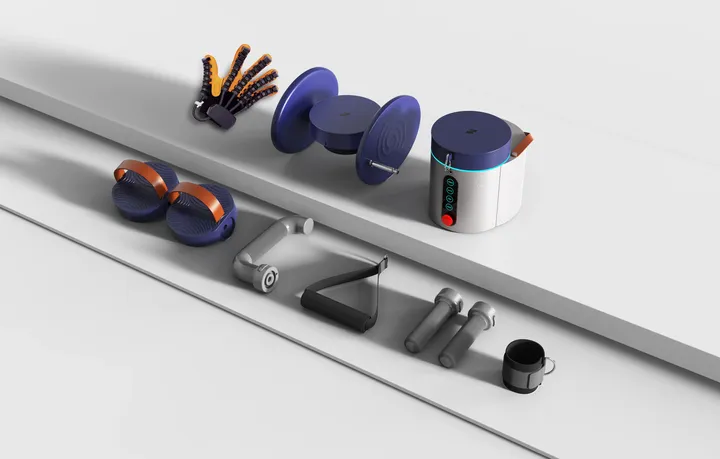
Types of stroke rehabilitation equipment buyers compare
The first decision is not brand but training coverage: what movement a device lets a user practise, how the setup is adjusted, and what support the buyer will need after delivery. Clinics usually compare several categories side by side, while home buyers narrow the list to what can be stored, mounted and supported in a domestic setting. UK and European stroke guidelines recommend at least three hours of therapy on five or more days weekly, with personalised intensity delivered by multidisciplinary team members; that guidance shapes how institutions plan capacity, not which product a buyer should choose. This guide does not rank named competitor products.
Hand training devices focus on grip, release, finger movement and wrist movement. Upper-limb devices support shoulder, elbow and wrist practice, often with reaching or pulling tasks. Lower-limb devices support hip, knee and ankle movement. Physiotherapy devices cover a different buying category and are usually selected for the modality and the operator workflow rather than for hand or limb training coverage.
For a clinic, the shortlist often includes hand, upper-limb, lower-limb and multi-module devices because different users need different training stations. For a home setting, buyers usually look for a compact unit with clear setup requirements and a service path that does not depend on an on-site technician. In both cases, ask what the device trains, how settings change between sessions, and what accessories are included before comparing price.
Home setup vs clinic setup
Home and clinic buyers face different constraints. A clinic plans around multiple users, scheduling, storage and staff training; a home setting plans around a single unit, a fixed surface and a simple routine. Space is the first check. The second is the mounting surface. For UniGym All-in-One Home Gym System, the electric suction-cup base needs a smooth, non-porous surface. UniGym weighs 6 kg.
Setup and service also differ. Institutions usually want installation guidance, operator training and a spare-parts route written into the purchase plan. Home-care buyers need a setup they can understand and a support path for questions after delivery. Installation guidance, operator training, remote technical support and spare parts can be arranged for RobotGym products. For either setting, confirm who will run the session, where the unit will be stored, and how accessories will be kept together.
A clinic may also need documentation for internal procurement and staff use, while a home buyer may need a simpler handover. Put those questions to sales before ordering.
What this guide does and does not tell you
Use this section as a buying checklist, not a suitability guide. Put documentation questions to sales for the model and market you are buying for.
In training terms, stroke recovery devices fall into hand, upper-limb, lower-limb and multi-module groups; each group is defined by what a user can practise, not by a condition label. UniGym is a multi-in-one rehabilitation robot, not a robotic arm, and its glove is one training module rather than a standalone product. Its 10+ training movements cover hands, upper limbs and lower limbs as one system. UniGym provides a main unit, rotation module, pull-rope module, rehabilitation gloves and additional accessories to cover diverse training tasks. This guide does not rank or compare named competitor products.
A stroke rehabilitation devices setup can be built around a single unit or several. Multi-module systems combine hand, upper-limb and lower-limb training in one unit, so the buyer compares how modules connect, how settings change and what accessories are included. UniGym weighs 6 kg, has a 0.1 m² footprint and offers 10+ training movements for the hands, upper limbs and lower limbs, mounted by an electric suction-cup base that needs a smooth, non-porous surface. See the UniGym product page for module and accessory details.
Once you move from evaluation to ordering, stroke therapy equipment supply questions centre on service and scheduling. Operator training, installation guidance, remote technical support and spare parts can be arranged. Lead time is 15–30 working days for standard configurations; customised builds and large orders are scheduled on confirmation. QiJia Q1 Eldercare and Nursing Robot is a humanoid eldercare and nursing robot for semi-disabled and disabled elderly people; a standardized mass-production version is planned for 2026. Refer payment terms and model documentation to sales.
This guide describes training coverage and product features only. RobotGym does not make condition-, age- or patient-specific suitability claims. For rehabilitation equipment for stroke patients, review suitability with your own clinical team and contact sales for specifications.
For stroke rehab equipment for home, plan the surface and working room first. Installation guidance, operator training and remote technical support can be arranged. MOQ is from 1 unit, with sample orders and customisation available; these points describe supply setup, not suitability for any patient group.
Adaptive equipment for stroke patients is a broader term that covers daily-living aids, seating and mobility products as well as robot-based training devices. For procurement, separate general adaptive aids from motorised training systems with modules, sensors and app controls. To enquire, reach our sales team at China +86 18221940989 or Germany +49 1785282225, or use the contact page to email sales. MOQ is from 1 unit, with volume pricing for distributors and institutions; sample orders, customisation and wholesale supply are available. Price questions go to sales.
How training routines shape equipment choices
Equipment choices should follow the training routine the buyer intends to run. A clinical review recommends task-specific training be routinely applied by occupational therapists for post-stroke upper-limb recovery, using repetitive, massed practice and positive, timely feedback. That recommendation points buyers toward devices that make repeated practice easy to set up, adjust and record. A device that takes too long to reconfigure between tasks may be used less often than its training coverage suggests.
Digital features are also part of the comparison. A Cochrane review of 19 studies involving 565 patients reported positive arm-function and daily-living outcomes for virtual reality plus video-gaming, while cautioning that small samples limited interpretation. For buyers, the practical lesson is to ask how games, videos and data reports fit the session, not to treat any single feature as a guarantee. UniGym’s intelligent app provides training modes, supports personalized rehabilitation plans, and includes training videos, fun games and data reports.
Remote oversight and monitoring are separate categories. Home-based telerehabilitation, in which a healthcare professional remotely oversees rehabilitation, has been reported as a feasible alternative for patients with stroke. A scoping review identified wearable devices and sensor-based monitoring systems for at-home stroke recovery, with preliminary evidence supporting some upper-extremity monitoring and sensory-motor tools. These findings describe service models and monitoring categories; they do not make a product claim.
Matching modules to training coverage
A multi-module system is only as useful as the way its parts fit together. UniGym provides a main unit, rotation module, pull-rope module, rehabilitation gloves and additional accessories to cover diverse training tasks. Mode and training parameters can be changed within the same system, reducing unnecessary equipment switching between sessions. Module and accessory replacement is aligned with training requirements to support shifts between different exercise types.
Buyers should map each module to the training coverage they need, then check the changeover steps. Hand, upper-limb and lower-limb tasks may use different accessories, so storage and accessory tracking matter in both clinic and home settings. The app supports iOS and Android, and the wireless battery is a 6400mAh power lithium battery with 12 hours of battery life. Those details affect how a unit fits a room, a clinic schedule or a daily routine.
Next steps for distributors, clinics and home-care buyers
Distributors can review the wholesale supply path and request volume pricing; clinics can compare rehabilitation equipment by training coverage; home-care buyers can start with the compact UniGym format and confirm surface and working-room requirements. The multi-in-one rehabilitation robot series, which includes UniGym, has reached mass production of thousands of units and is exported to North America, Europe and Southeast Asia. UniGym won the iF DESIGN AWARD 2025 in the Medical/Healthcare discipline.
To move from shortlist to evaluation, contact our sales team with the training tasks you need to cover, the setting, and the accessories you expect to use. Ask for a sample order or a customised configuration where relevant. See case studies for project examples. For documentation and service questions, use the contact page.